Wilderness Medicine Training Center Thailand
Unparalleled Instruction in Wilderness Medicine & Outdoor Program Risk Management
The injuries and illnesses encountered in remote and wilderness environments, together with their associated signs, symptoms, assessment, and treatment, are well documented in the medical literature and readily available to anyone with access to the internet.
What distinguishes wilderness medicine programs from one another is pedagogy.
How information is delivered.
How skills are practiced.
How judgment is developed under pressure.
The Wilderness Medicine Training Center (WMTC) curriculum is built around a pedagogy that is structured, deliberate, and field-proven. This approach facilitates learning and critical thinking in stressful, resource-limited environments. Its effectiveness is consistently demonstrated through student performance during simulations and through reported actions during real-world incidents.
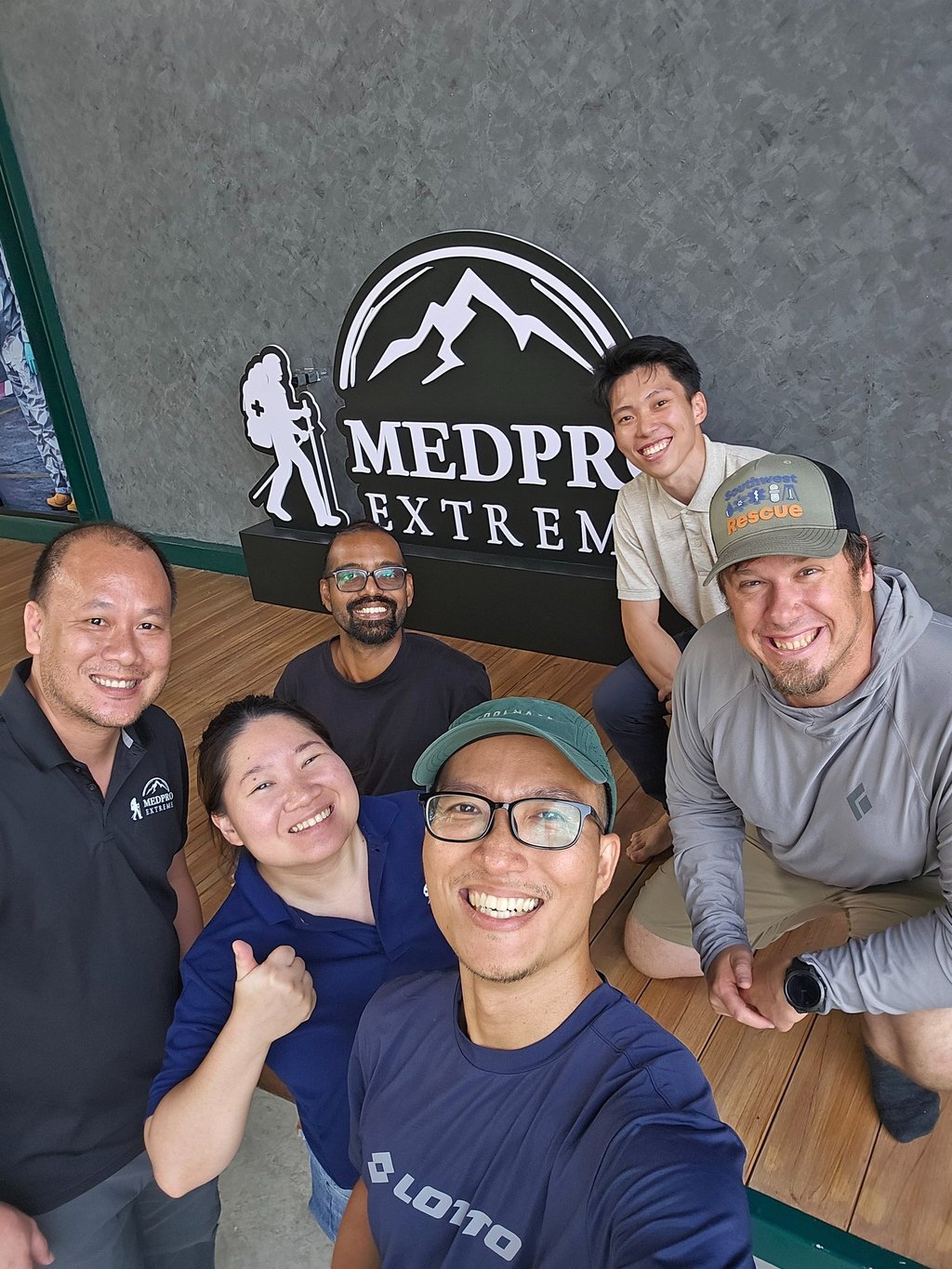
As the official WMTC training center in Thailand, MedPro Extreme delivers this curriculum as designed, maintaining the instructional depth, structure, and standards that define WMTC education globally.
WHAT DEFINES A TRAINING CENTER IS PEDAGOGY.

Globally Recognized Certification
All courses within the Wilderness Medicine Series follow the official curriculum, pedagogy, and assessment framework of the Wilderness Medicine Training Center (WMTC) and align with educational standards set by the Wilderness Medicine Education Collaborative (WMEC), informed by the scientific guidance of the Wilderness Medical Society (WMS). MedPro Extreme is the official WMTC training center in Thailand and the only wilderness medicine training center in Southeast Asia delivering this curriculum.
When you complete training, you receive internationally recognized certification built on globally accepted wilderness medicine standards. This certification reflects a shared clinical framework and assessment system used worldwide, allowing you to apply your skills consistently across environments, teams, and regions. For you, this means your knowledge, judgment, and credentials remain relevant wherever your work or travel takes you.
Certified by
Wilderness Medicine Training Center
Built on globally recognized standards
Wilderness medicine did not develop by chance. It evolved through decades of field experience, clinical research, and hard lessons learned in environments where help is far away and decisions carry weight.
At the scientific and professional level sits the Wilderness Medical Society (WMS). WMS is where wilderness medicine advances as a field. It supports research, publishes evidence-based guidelines, hosts international conferences, and provides a forum for clinicians, researchers, and educators to examine what works, what fails, and what needs to change. This is where new ideas are tested, debated, and refined. WMS shapes the medical knowledge that underpins wilderness medicine, but it does not certify courses or dictate how training programs are delivered.
That role belongs to the Wilderness Medicine Education Collaborative (WMEC). Formed in 2010, WMEC is a collaborative standards body created to bring order and consistency to wilderness medicine education. It is made up of a small group of recognized organizations that work together to define scope of practice, educational objectives, minimum training hours, and certification standards. WMEC does not teach courses. It ensures that courses claiming to be wilderness medicine meet agreed-upon benchmarks. Only a limited number of organizations worldwide currently fall under WMEC, and many wilderness medicine programs do not.

Pedagogy
A clear understanding of wilderness medicine is essential for effective site management and should be part of the training of every trip leader, outdoor professional, and program administrator.
A wilderness medicine course should increase a student’s awareness of the potential problems inherent in remote travel and provide sufficient education and insight to prevent most of them. At the same time, it must teach the assessment and treatment skills required to manage severe illness and injury when prevention fails.
WMTC courses focus on practical instruction that students can understand, remember, and use.
What distinguishes wilderness medicine schools from one another is their pedagogy. Not the topics covered. But how deeply those topics are understood.
The WMTC approach helps students sort through a patient’s signs and symptoms to reach accurate assessment, treatment, and evacuation decisions. This approach emphasizes organization, prioritization, and clarity rather than memorization.
Experience
Normal anatomy and physiology are taught before exploring pathophysiology.
This progression allows students to develop a functional understanding of each condition. Students learn to connect what they see in the patient to what is happening internally and how that informs assessment and treatment.
This approach avoids checklist thinking and supports more effective decision-making in the field.
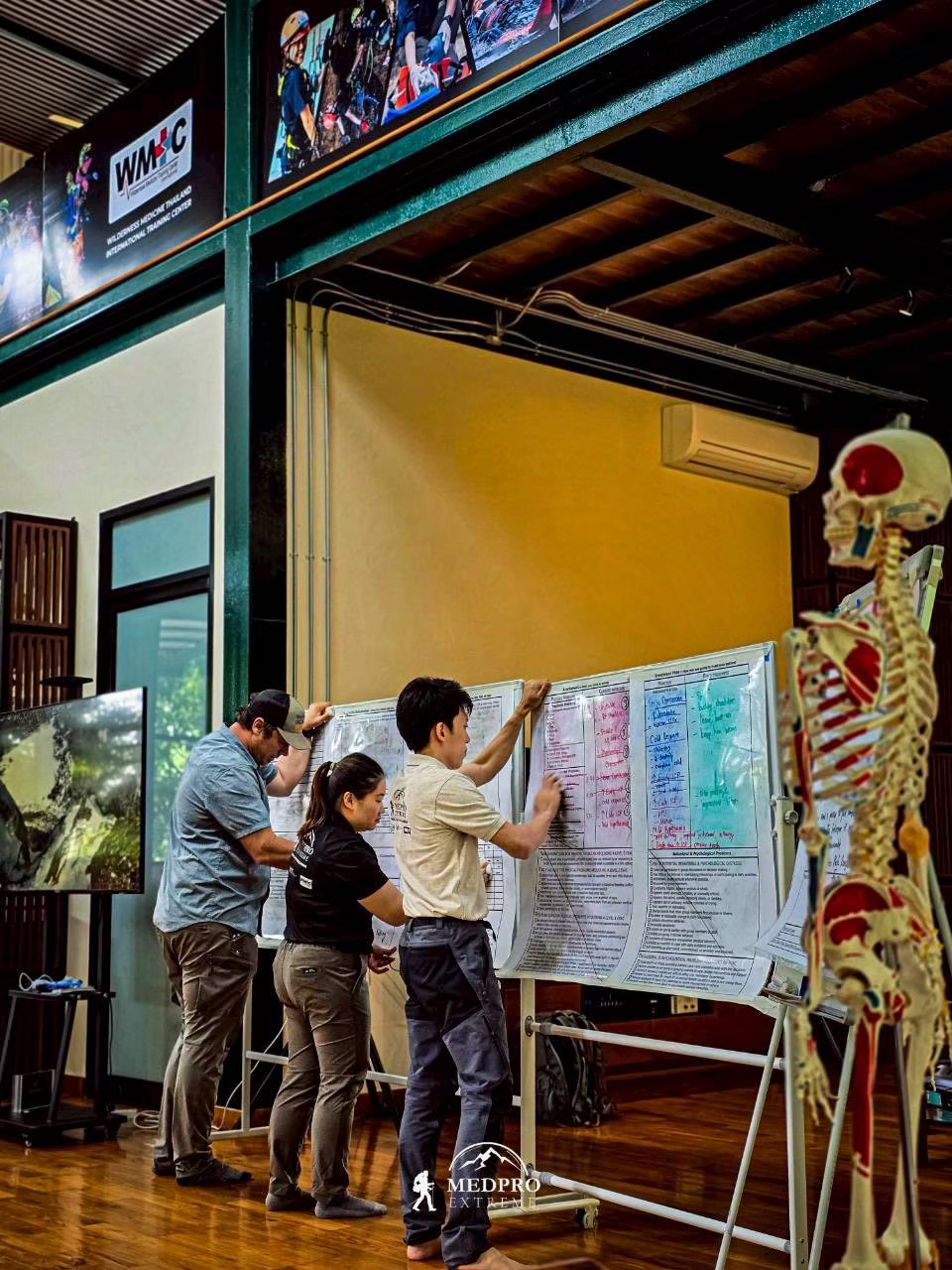
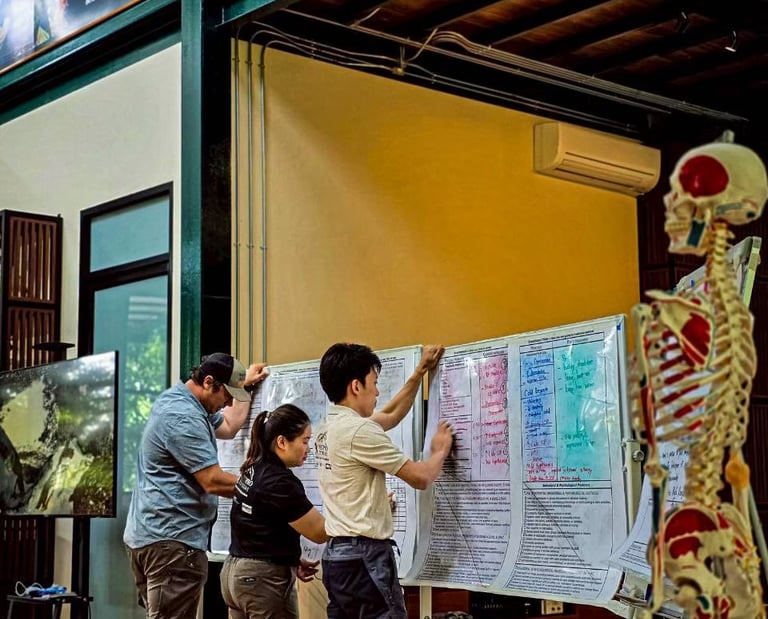
Patient assessment system
Students are unlikely to remember all the material presented during a course.
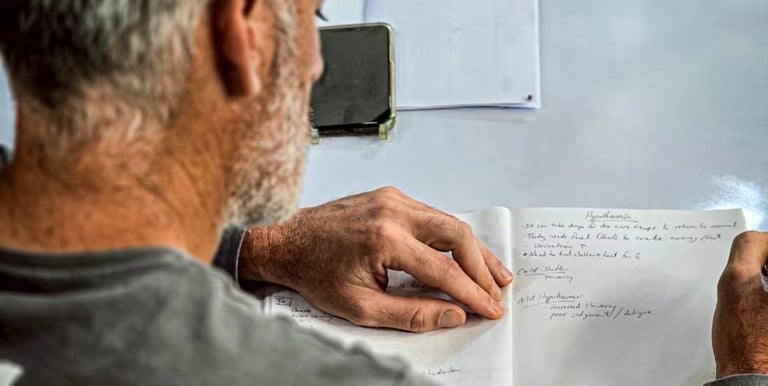
WMTC recognizes this reality and has developed structured field manuals and patient notes to guide students during simulations and real incidents.
Patient notes:
Mirror the WMTC Patient Assessment System
Integrate directly with the handbook
Support thorough, calm, and organized care
Students use these tools repeatedly throughout training so the system becomes familiar and reliable under stress.
Course formats
WMTC courses are offered in both standard and hybrid formats.
Standard courses combine in-person lectures, skill labs, simulations, and case study reviews.
Hybrid courses separate didactic learning and practical skills. Students complete online modules independently before attending an in-person session focused on hands-on training and simulations.
Both formats meet and exceed WMEC certification standards.
Case studies and realistic simulations
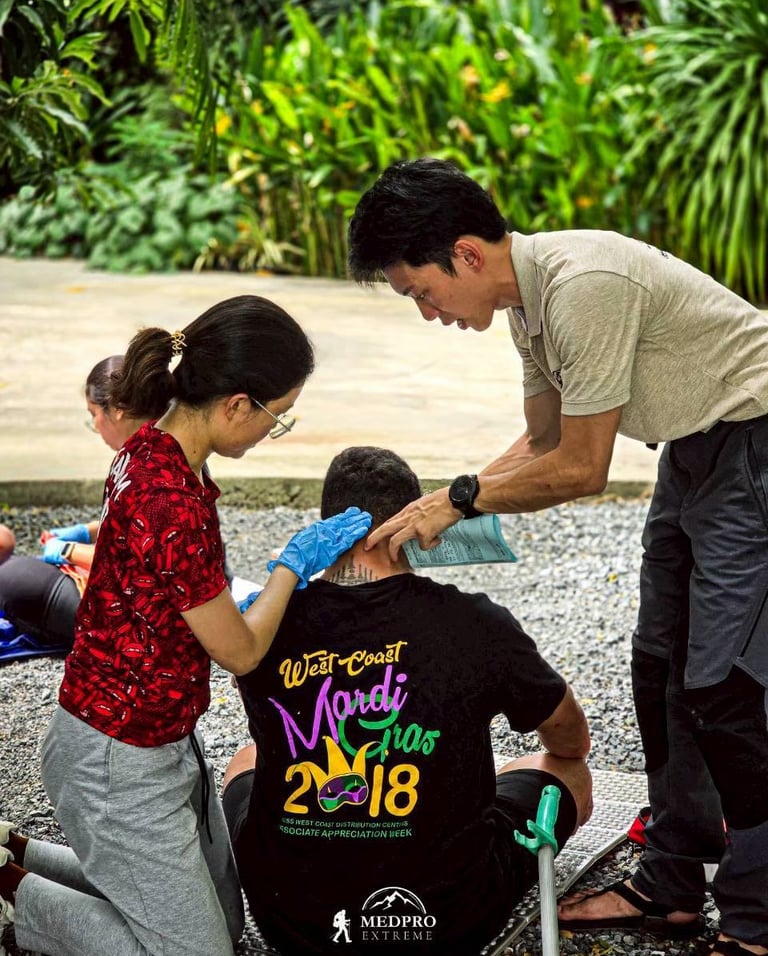
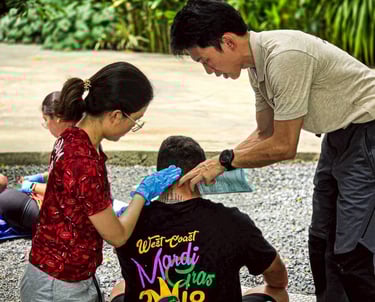
Students learn the most during simulations.
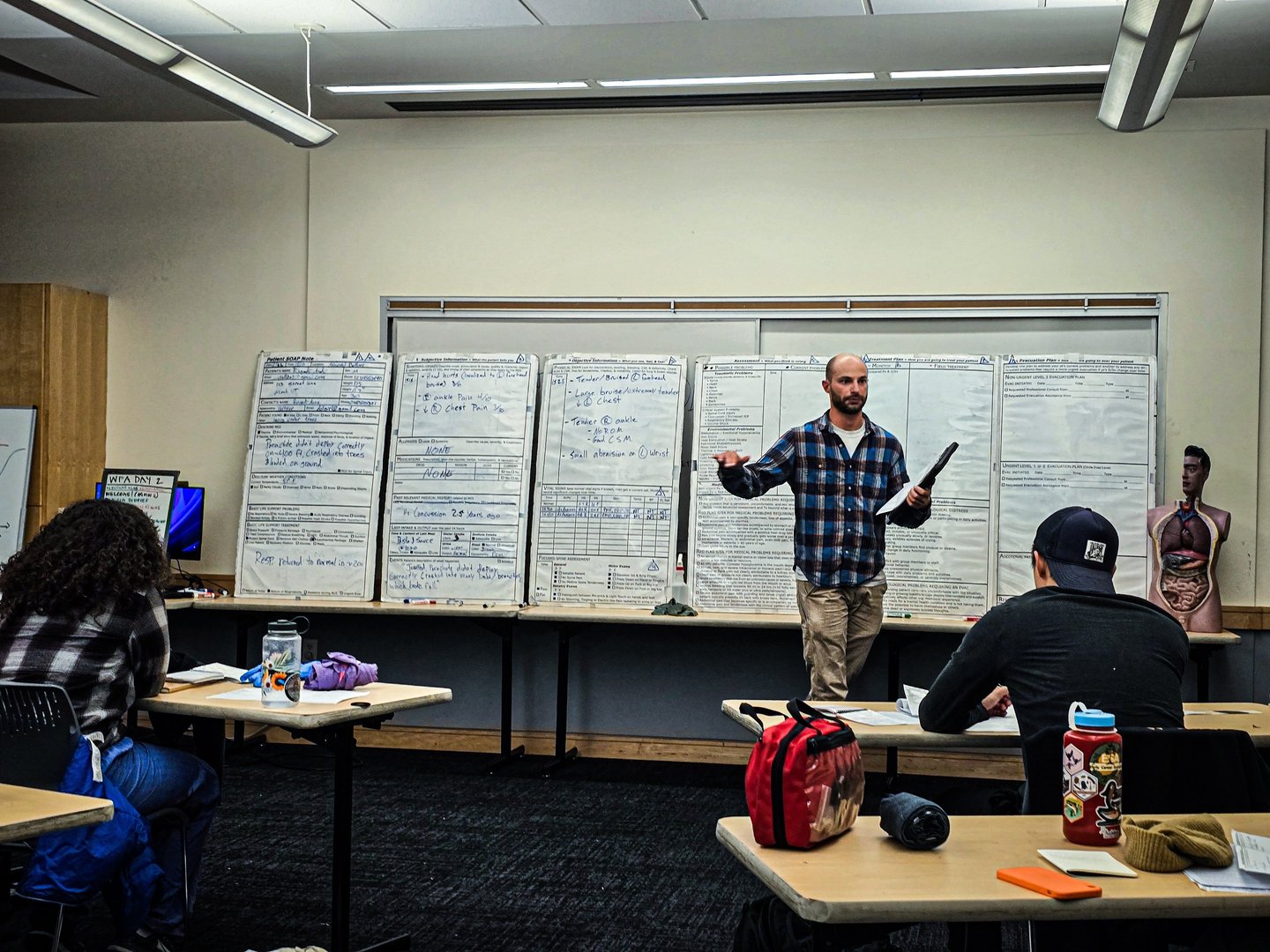
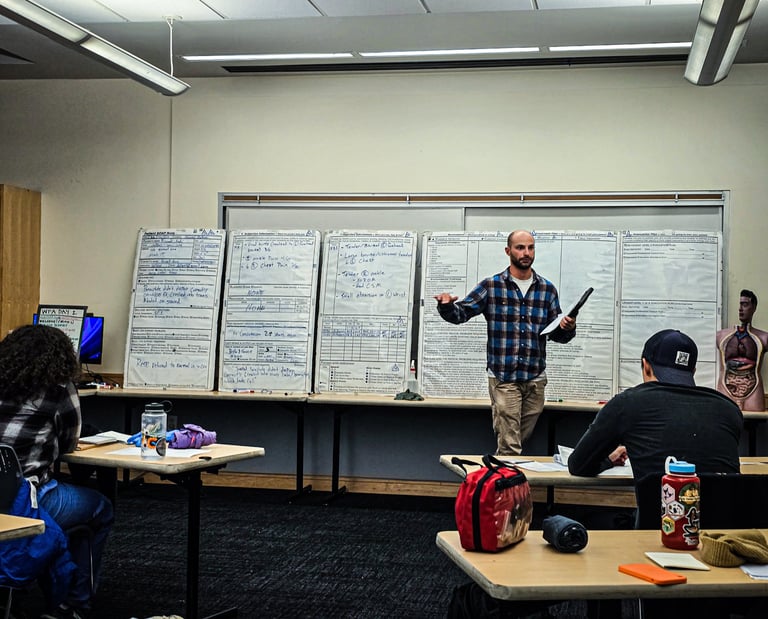
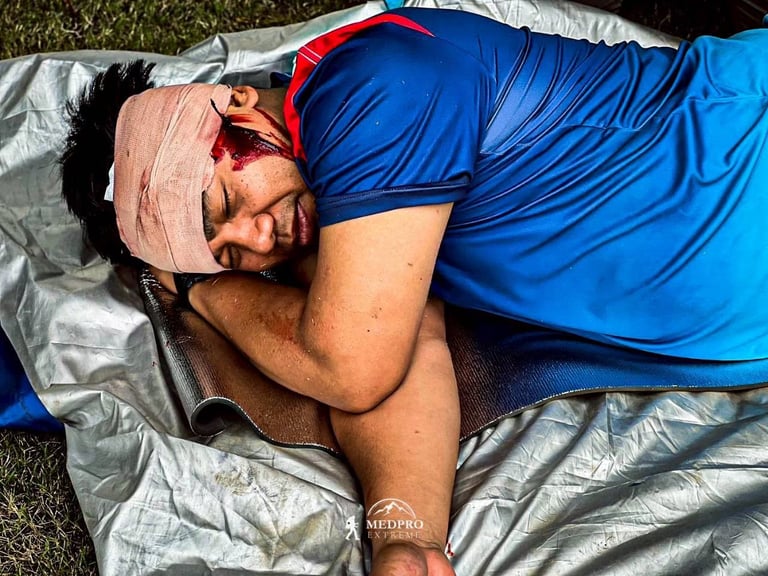
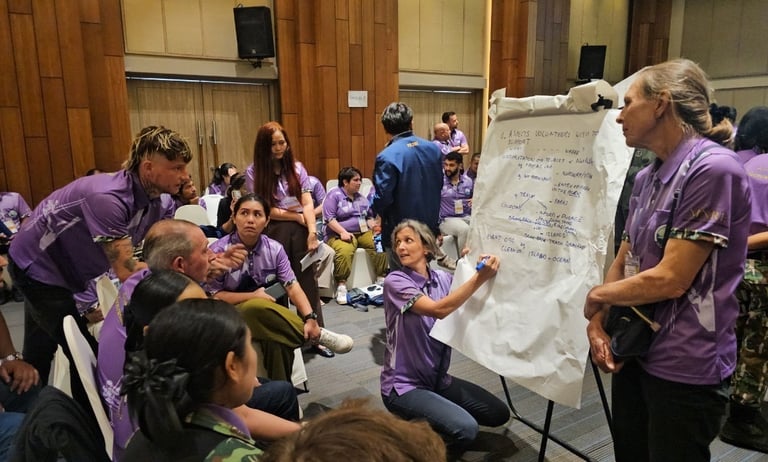
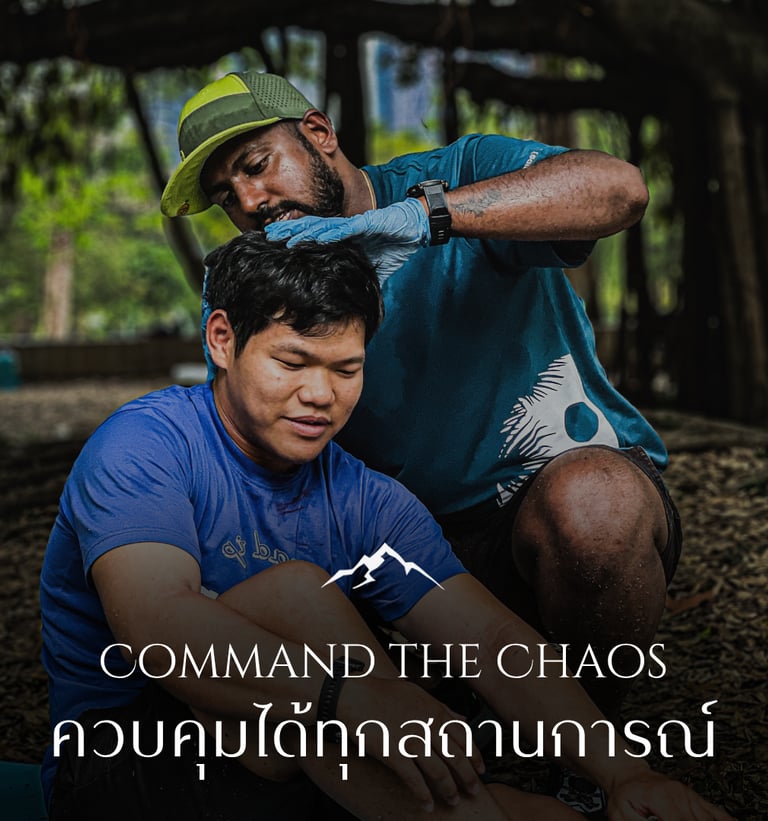
Simulations are where everything comes together or falls apart. Both outcomes are valuable. Training includes extensive interactive case studies and realistic simulations that allow students to make decisions, discuss outcomes, and learn from mistakes under instructor guidance.
Simulations begin on the first day, starting with Basic Life Support skills and progressing into longer and more complex scenarios. As new topics and skills are introduced, simulations increase in difficulty and scope. Advanced courses often conclude with multi-patient or mass casualty simulations.
All simulations take place outdoors in realistic environments. Students work with well-stocked first aid kits and common expedition equipment appropriate to the scenario. Simulations are debriefed using large patient posters identical to the students’ patient notes. Longer courses include video review to support discussion and learning.
Repeated exposure builds familiarity, confidence, and competence. This emphasis on repetition is a key reason WMTC courses exceed WMEC minimum certification standards.
Educational value
WMTC’s curriculum, pedagogy, delivery strategies, and teaching materials represent a globally recognized standard in wilderness medicine education.
Delivered in Thailand through MedPro Extreme, this standard remains consistent in depth, structure, and expectations.
Courses exceed minimum certification requirements for topics, skills, and hours.
It's The Decision That matter
To prevent problems when possible.
To manage them effectively when they occur.
course Schedule for WMTC Worldwide
Professional Certification & Public Safety

OFFICIAL SCHEDULE
Join our upcoming sessions across the region. View dates for Wilderness First Aid, WFR, and specialized rescue certifications
COURSE CATALOG & SYLLABUS
Explore comprehensive course syllabi designed for medical professionals, outdoor guides, and elite rescue teams.
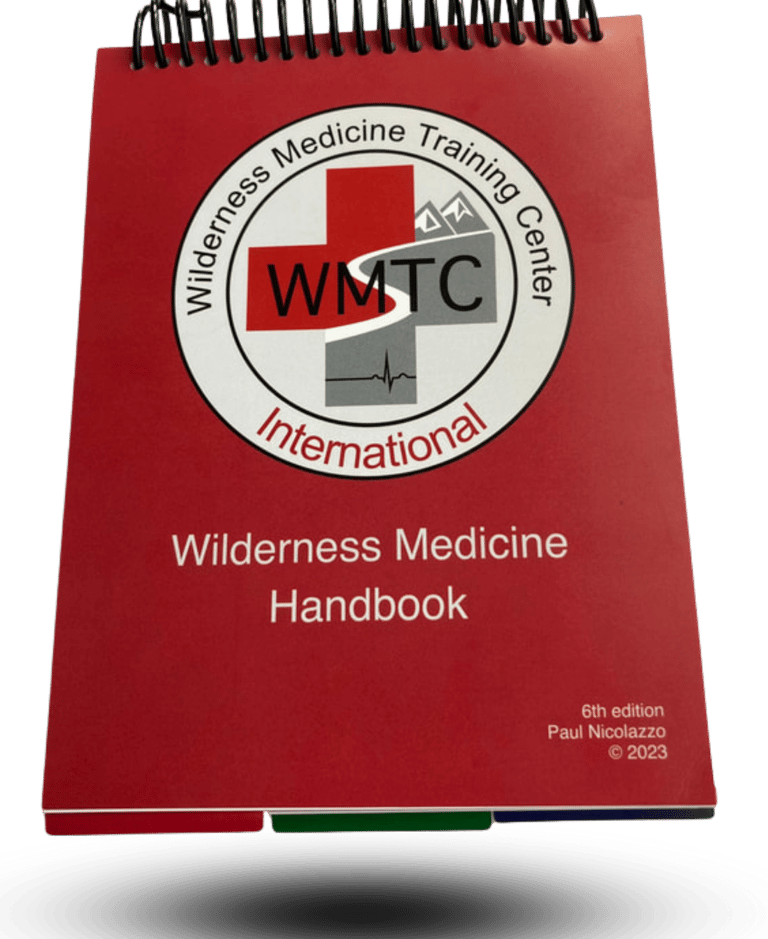
The Wilderness Medicine Handbook
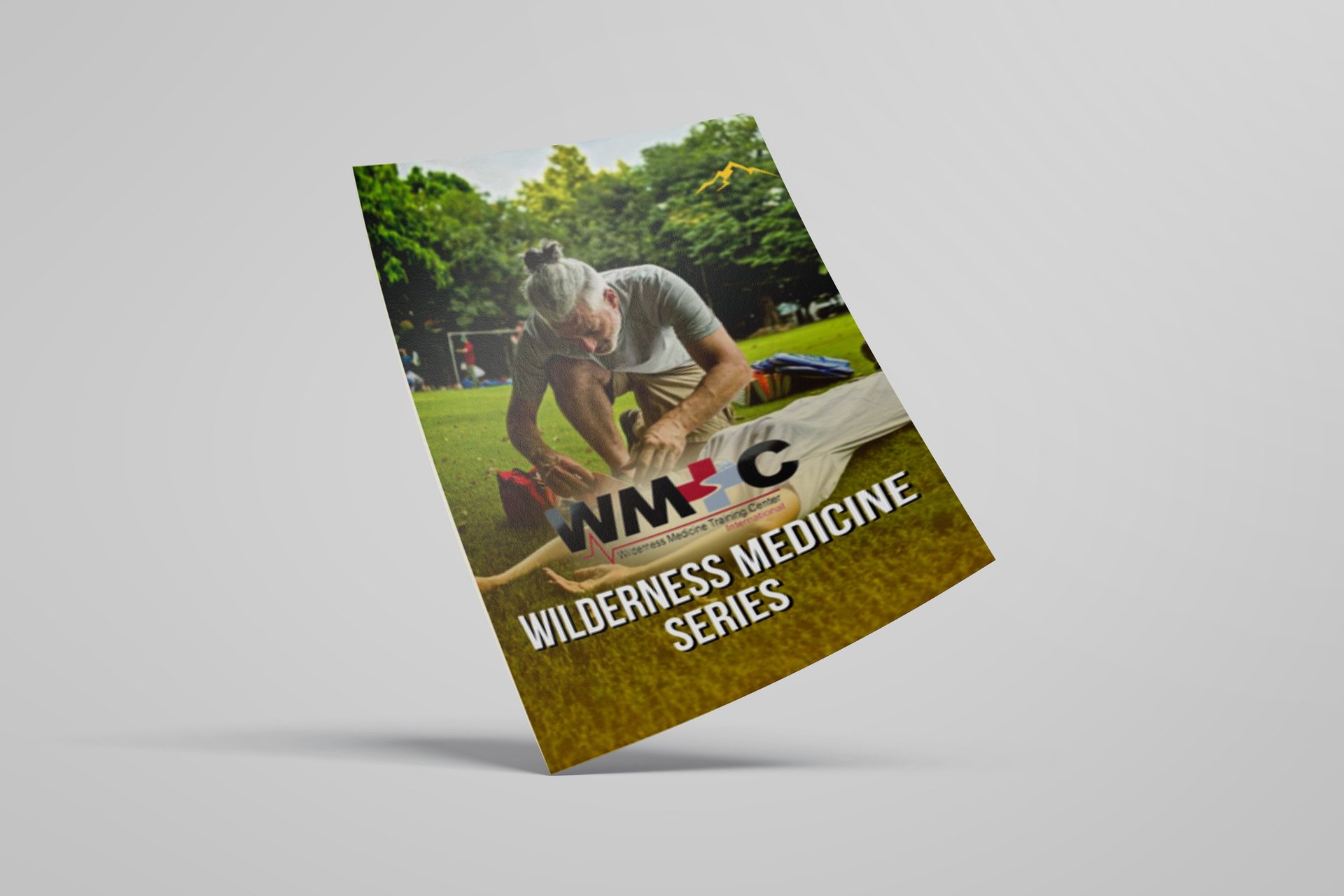
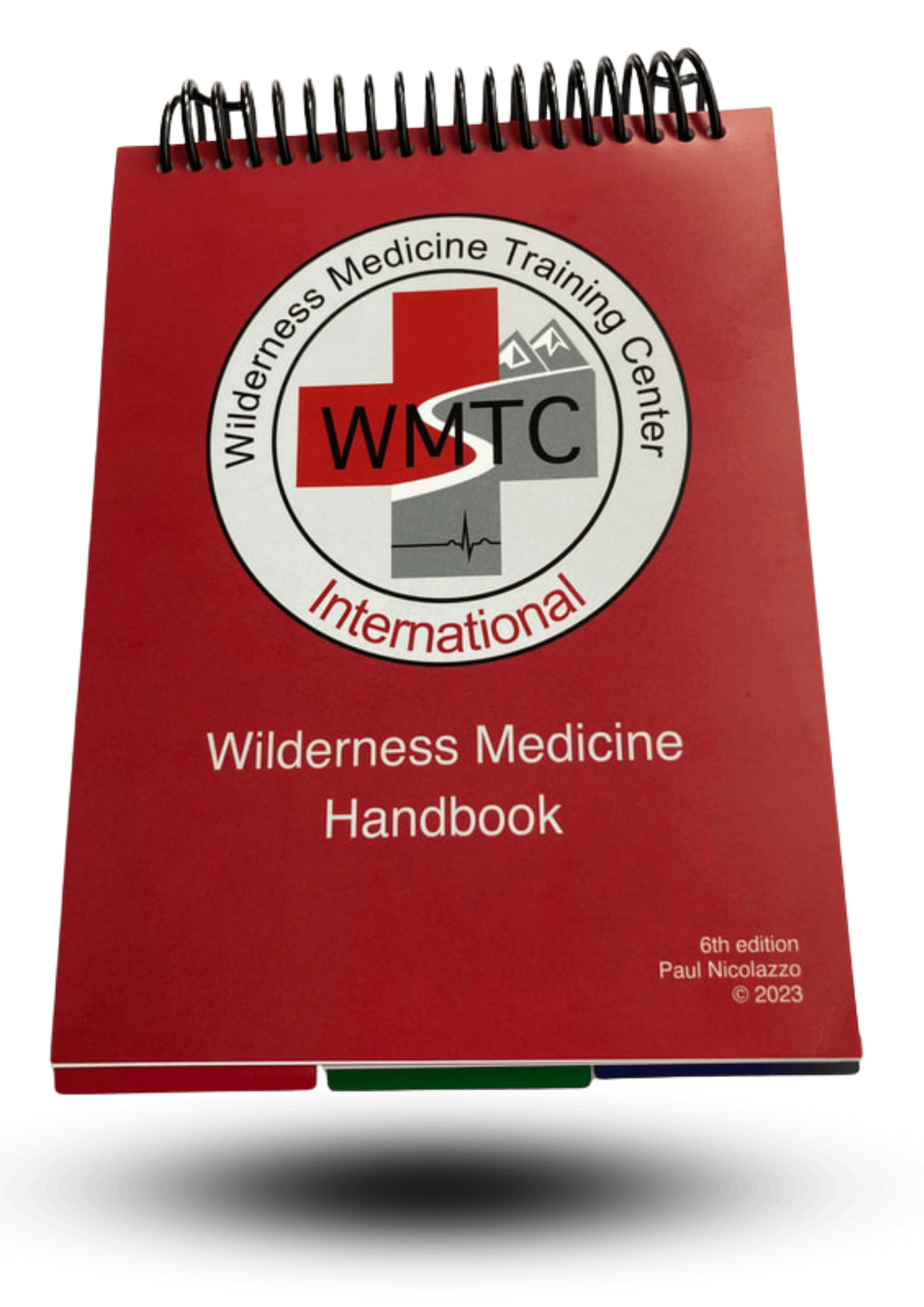
As part of WMTC-certified training delivered in Thailand by MedPro Extreme, all participants train using the official curriculum, assessment system, and reference materials developed by the Wilderness Medicine Training Center.
This is not supplemental material.
This is the core reference used throughout training.
Participants receive access to the official WMTC Wilderness Medicine Handbook, developed and maintained by WMTC and aligned with standards set by the Wilderness Medicine Education Collaborative (WMEC).
Why this matters
Curriculum
Many courses teach content. WMTC provides a system.
Training, simulations, patient notes, and reference materials all follow the same structure. This consistency supports clarity, organization, and sound decision-making under stress.
As the official WMTC training center in Thailand, MedPro Extreme delivers this curriculum using the same materials, standards, and instructional framework used worldwide.
Training Environment
Training environments are selected to reflect real terrain and operational constraints. Safety systems are enforced without shortcuts, and scenarios are designed to mirror the conditions under which these skills are applied.
Feedback is continuous and practical. Errors are corrected early to build habits that transfer directly to field operations.
You train the way you are expected to operate.
Digital option available
Built for mobile use in the field
The printed Wilderness Medicine Handbook is optimized for field use.
It is streamlined, durable, and focused on the information most often needed during patient care in remote environments.
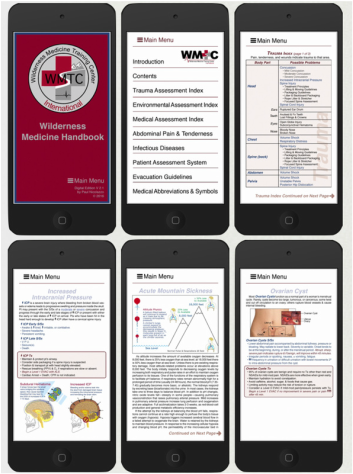
The Digital Wilderness Medicine Handbook expands on that foundation.
It provides:
More detailed explanations
Additional charts and graphics
Expanded photos for closer review
Enhanced navigation through links and indexes
The digital edition is designed as a comprehensive reference, while the printed handbook is designed for efficient use in the field.
Both follow the same structure and assessment system.
Both support the same decision-making framework.
The difference is depth.
For students who want the full scope of information in one place, the digital edition provides everything—always accessible on your phone or tablet, even offline.
All updates are provided free for life.
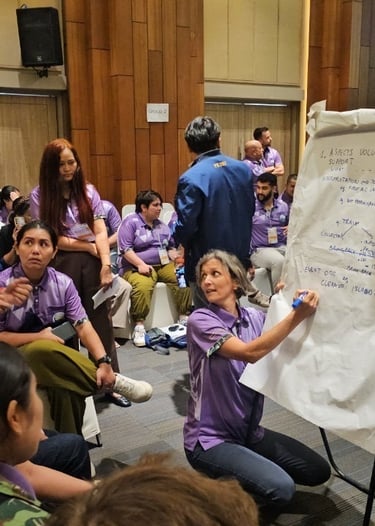
Wilderness medicine is shaped by patterns of travel, not geography alone. Training is most relevant when it is delivered where people routinely operate in remote, resource-limited settings, often far from formal medical systems. Thailand represents one of the most concentrated intersections of outdoor activity, international travel, and remote operations in the world. This makes it a strategically appropriate location for wilderness medicine education aligned with the Wilderness Medicine Training Center (WMTC) framework.
Each year, Thailand hosts a continuous flow of outdoor professionals, guides, expedition teams, and travelers moving through jungles, mountains, coastlines, and offshore environments. Many operate with limited medical support, mixed-experience teams, and delayed access to evacuation. These conditions mirror the core assumptions of wilderness medicine education. Training in this context reinforces why clinical reasoning, structured assessment, and decision-making under constraint are central to the discipline.
Thailand as a strategic center
“Is This Right for Me?”
Wilderness medicine is often associated with expeditions and remote travel, and that is where the Wilderness Medicine Training Center (WMTC) curriculum was first shaped. It is designed for people operating where help is not immediate, equipment is limited, and decisions matter. If you spend time outdoors—trekking, diving, climbing, paddling, or traveling with friends or family—this training gives you a structured way to recognize risk, assess problems early, and act with clarity.
At the same time, the curriculum applies directly to professionals. Healthcare providers, rescue teams, guides, and instructors benefit from its emphasis on clinical reasoning, systems-based assessment, and working effectively under constraint. Whether you are responsible for others in the field or want to travel more safely yourself, this training builds judgment that holds up when conditions are not ideal.
Other Courses
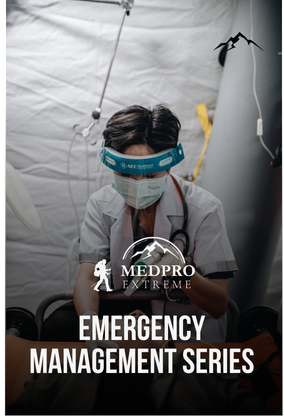
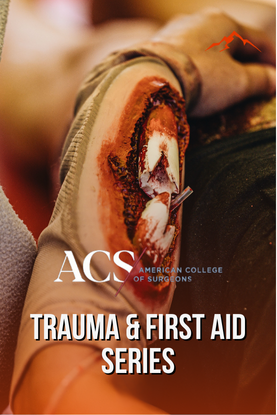
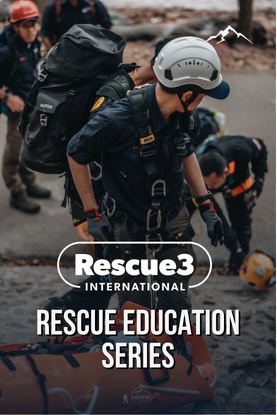
Four International curriculum series.
Built for real operations. Scaled for teams.
TRAINING PROGRAMS
STAY WITH US
Company
Resources
PRIVATE & GROUP TRAINING
Brand & Standards
Our Instructors
Testimonials
FAQs
Media & Gallery
In-House Training
Private Group Courses
Corporate & Industrial Training
Healthcare & EMS Training
BOOKING & ACCESS
Request a Quote
Book a Private Course
Course Schedule
Custom Program Design
Emergency Management
|
------------------------------------------------------------------------------------------------------------------------------------------------------------------------------------------------------------------------------------
------------------------------------------------------------------------------------------------------------------------------------------------------------------------------------------------------------------------------------
Trusted by professionals worldwide
|
Training Pathways
|
Policies & Training Standards
--------------------------------------------------